Algorithm to Exploitation. It can Start with a Dance
Damian R, Co Founder (IPA)
27 February 2026
Our investigations team and social workers at International Protection Alliance (IPA) tell me they get frustrated working the TikTok cases. Huh? They work significantly more challenging investigations than those and what’s to get frustrated about rescuing a 15yo from online exploitation?
They tell me most of these kids don’t want to be rescued, they’re angry and they let everyone know about it. Our social workers stand by them, support them, and over time these kids can begin to understand, but it’s a long and difficult process.
In general, some kids want to be rescued, for others it’s more complicated; but something that is apparent in the cases where the kids are exploiting themselves, selling themselves and their friends online (no trafficker involved and of their own volition), is that they think it’s their right to do so.
Children are selling themselves on the very platforms designed for them, yet the tech giants refuse to put any protective measures in place. We’re told these apps are for 13-year-olds, but where are the real safeguards? Right now, engagement-driven algorithms aren’t just ignoring the risk; they’re practically fueling the exploitation.
This got me thinking; where did this come from? How did we get here as a society when an otherwise normal kid from a good family thinks it’s okay to sell themselves (or their friends) online? These are kids from middle income, hardworking families with kind, supportive parents and a good education.
The digital landscape is constantly changing and with that so does trafficking and exploitation. This can be for a multitude of environmental, social and cultural factors, but ultimately, this personal production of Child Sexual Abuse Materials (CSAM) is down to what a child might view as reasonable behaviour. Indoctrination is real, when a child is brought up around a culture that deems something is okay because they’ve had excessive exposure to it then how can they be blamed when an adult tells them it’s wrong?
Now I’m not saying it’s the inevitable evolution for every child that stands in front of a phone camera or has a social media account, and certainly we see many other forms and entry into online exploitation. The following highlights just one of the ways these kids are falling victim.
Starts with a Dance
A 14-year-old posts a trending dance, seeking nothing more than harmless validation (likes).
Escalation: Social Media algorithms prioritize suggestive content because it drives engagement. So, it begins pushing that teens’ content to a wider, often predatory, audience.
Hook: When predators flood the DMs, the teen mistakes the attention for fame or influence long before they recognize it (if at all) as exploitation.
Fast Money
The internet has rebranded the sale of sexual content as not just a side hustle anymore but as digital entrepreneurship.
Normalization: High-profile influencers frame subscription based adult sites as empowering careers and show this off by driving luxury vehicles and living a lavish lifestyle at a young adult age – something for a teen to aspire to… right? Got the money, got the car. That’s what a successful life looks like these days. To a child.
Low Barrier to Entry: Teens post their entire life online trying to portray this idyllic life in competition with their friends list. They’ve been posting photos for years. Sharing a photo has become second nature. So, when a teen starts to sell a photo, they see it as no different from selling clothes; just another way to afford the latest pair of trainers or tech and maybe reach that lavish lifestyle like those influencers they follow.
The Game: Platforms use badges, tiers, and levels to make the process feel like a video game rather than a high-risk transaction.
The Death of Cash
The old world required physical cash. The digital world uses anonymous, instant wallets.
Payments: Apps like Cash App, Venmo, or Revolut allow kids to receive donations or tips privately and instantly.
Virtual Currency: Often, the trade isn’t even for cash. Kids are traded “skins” for games like Fortnite and Roblox or digital gift cards. This monopoly money effect makes the transaction feel less real to a child.
The Lasting Effects of the Pandemic
The current generation of 15-year-olds spent their most formative social years (ages 11–13) behind a screen. For this COVID generation, the distinction between the digital self and the physical self is blurred.
When they sell a photo, video or livestream, they don’t feel like they are selling themselves, they’re selling just another digital file.
Friendly Recruitment
It is rarely stranger danger anymore. Now it’s a 16-year-old friend telling a 15-year-old, “I made $200 this week just by sending a few Snaps. It’s easy.” The peer-to-peer nature creates a false sense of safety, even though the person on the other end of the transaction is often a predator.
The Reality Shift
The anger and resistance we see from these teens makes sense in this context. They don’t think they’re being rescued; they think we’re shutting down their business. They feel like they are winning the game until the digital reality crashes into the physical one. We cannot protect kids using an outdated roadmap. It’s time to update our understanding of the digital landscape.
Maybe I’m Exaggerating
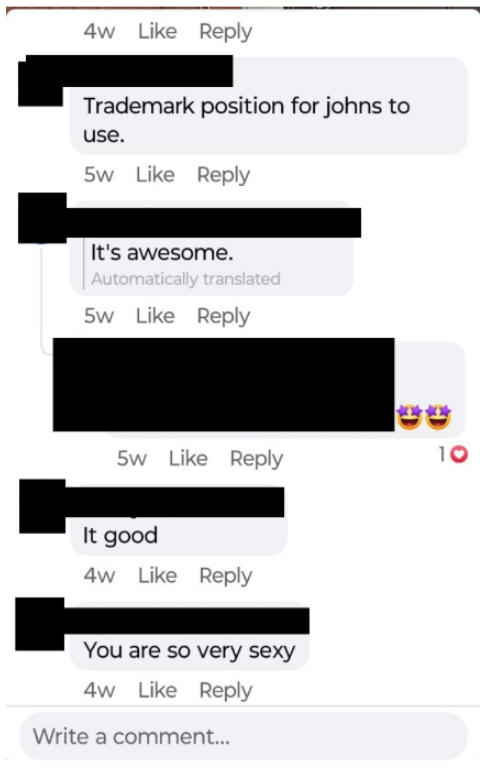
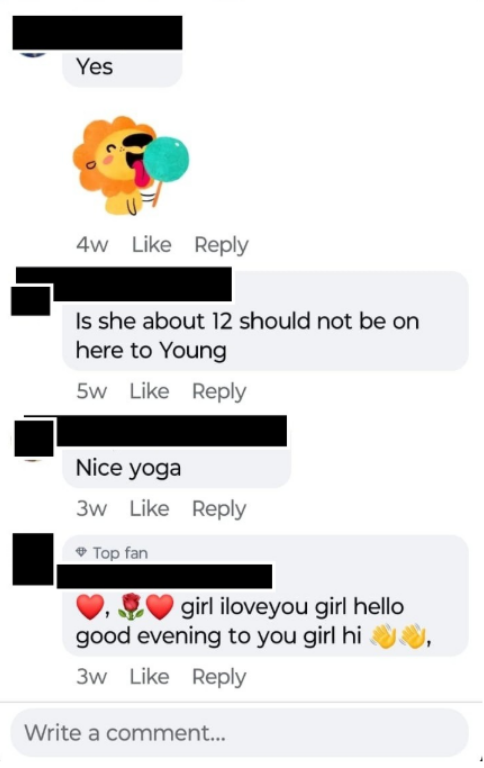
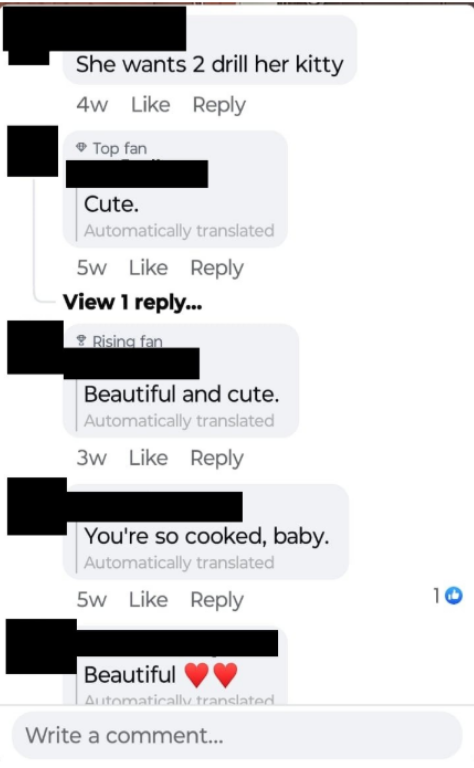
Still don’t believe me. Maybe you think it’s rare and isolated. Well, see pics attached. Be forewarned it’s graphic and disgusting and something that our investigators deal with daily.
These are screenshots of the comments section on a young teen’s social media account. In her post (which I won’t be including in the images) is a young girl doing a bend back. It’s a yoga pose. This particular image garnered 1.8 million views.
With 114k followers, the algorithm deemed this post to go viral. It’s not her only viral post, she has many. This is the attention that a child receives online. Literally only one comment that openly condemns it. If I removed the black bars you would see names from all over the world. What chance does this child stand.
The bottom line is this: We are fighting a 2026 war with a 1990s playbook.
We cannot simply parent our way out of an algorithmic trap, nor can we rescue our way out of a cultural shift that has rebranded exploitation as entrepreneurship. It requires a systemic overhaul from how we regulate fintech and social platforms to how we talk to our children about their digital value.
At International Protection Alliance (IPA), we are committed to updating that roadmap. But we can’t do it in a vacuum. We need educators, tech developers, and parents to look past the trending dance and see the pipeline for what it is.
The game is rigged against our children. It’s time we changed the rules.